December 2025, CTCP
Whether aesthetic or functional, it is increasingly sought after by consumers
To create or follow trends, add value and maintain or increase competitiveness in the market, product cus-tomisation and personalization – aesthetic or functional – is becoming increasingly important.
There is a growing demand for products that meet the individual needs of each user and consumer, accord-ing to their personal requirements and preferences, which forces companies to challenge themselves to increase the variability of the products they place on the market, while maintaining competitive prices.
Customisation and personalisation strategies have been developed over the years, with a commitment to individualization in order to satisfy the needs of the customer or target audience.
Customisation vs. Personalisation
It is important to distinguish between customization and personalization concepts. In customisation, the customer can choose and combine pre-selected features, and it can be considered that the consumer has limited participation, while personalisation is achieved through changes to the product, using the user's experience and information, which lead to unique and specific products. This difference also has an im-pact at industrial production, as providing pre-selected options is easier to manage than one-of-a-kind products, regarding materials availability, product tracking while in production and process control, aris-ing the need for flexible and agile production.
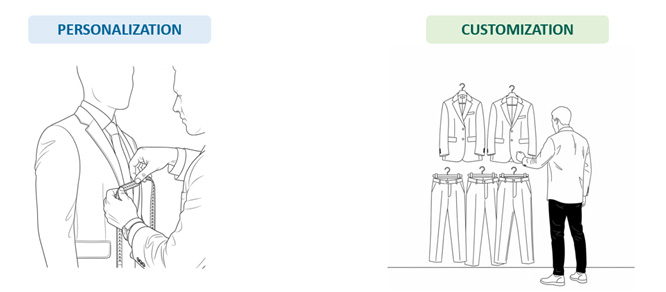
Personalisation: aesthetic vs. functional
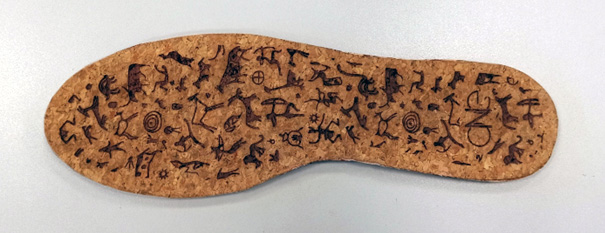
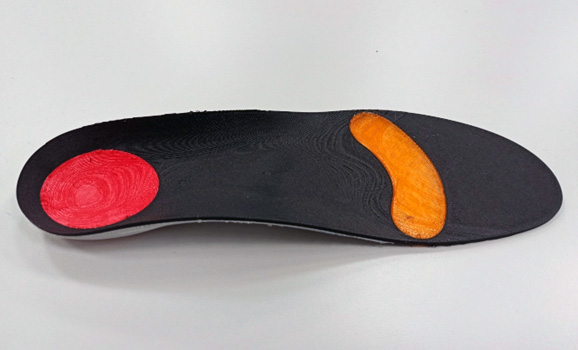
We can divide personalization into two types. Aesthetics aim to differentiate the product from a decorative point of view, such as including the customer's name or printing images. Functionality applies to products with a specific function for each customer, such as the production of components or footwear with medical or orthopaedical applications.
It is in these fields that technologies are gaining increased importance, due to their impact on different stages of production, such as laser engraving or digital printing, 3D scanning and augmented reality or virtual reality systems. Personalized and unique products are increasingly a trend in the market, and footwear and leather goods are no exception.
Personalization is leading to the emergence of new companies and business models focused on niche markets. Faced with these demands, brands – even the largest ones on a global scale – are beginning to offer personalization services, which will eventually lead to their entry into new markets.
Technologies and tools
The aesthetic customization and personalization of footwear and leather goods consists of decorating surfaces with reliefs, colours or markings, using various technologies, some of which are already widely used in the industry: digital printing, heat transfers, sublimation, 3D sublimation, screen printing, pad printing, embroidery, 3D knitting, laser engraving and cutting, stamping, 3D printing, CNC machining and CAD systems. The production of components such as insoles or orthopaedic footwear is more prominent in functional customisation.
In aesthetic customization, examples include Nike, Vans and Diverge, the latter a Portuguese brand, while in functional customization we have Aertex, FitMyFoot and Athos.
Mass customization and personalization offer customers freedom of choice, but they also complicate pro-duction, requiring the creation of reconfigurable manufacturing systems in order to quickly adjust the manufacturing process according to emerging needs.
This presents logistical challenges in terms of traceability. In the initial phase, the customer is purchasing a product that does not yet exist, so visual aids are needed to allow them to interact with and understand the impact of their choices and changes. The greater the individualization, the more challenging it will be, affecting waiting times and efficiency. It is important for brands to outline communication and cus-tomer data collection strategies so that their needs are fully met.
In conclusion, the growing trend towards personalization benefits consumers, who are willing to pay high-er prices, but it requires adaptations to production lines and systems, with a focus on increasing product variability, without neglecting process optimization. Nevertheless, the added value to the product and the development of emerging flexible technologies brings the market opportunity for companies and brands.
Publication date: 2026-01-27